
2025-2030 Strategic Plan
Overview
Vermont is at a pivotal moment for composting, soil health, and community resilience. Changing climate conditions, evolving state policies on organics diversion, and growing demand for healthy soils present both challenges and new opportunities for coordinated action. At the same time, farmers, land managers, municipalities, and community organizations are seeking reliable information, high-quality compost, and effective strategies for managing organic materials in ways that strengthen local economies and protect water quality.
Our vision is of a Vermont where organic materials are valued as resources, healthy soils support thriving farms and landscapes, and communities are more resilient to climate and environmental pressures. Achieving this vision requires bringing people together, expanding shared understanding about soil and compost, strengthening standards and policies, and building the markets and infrastructure needed for a robust composting ecosystem.
This strategic plan charts a focused path toward that future. It clarifies the roles CAV plays, sets priorities for collaboration, education, and advocacy, and identifies the systems and relationships that must be strengthened to advance high-quality composting statewide. By aligning our work with emerging opportunities and the needs of our partners, this plan positions CAV to support a healthier, more resilient Vermont—from the ground up.
Our core values

Healthy soil
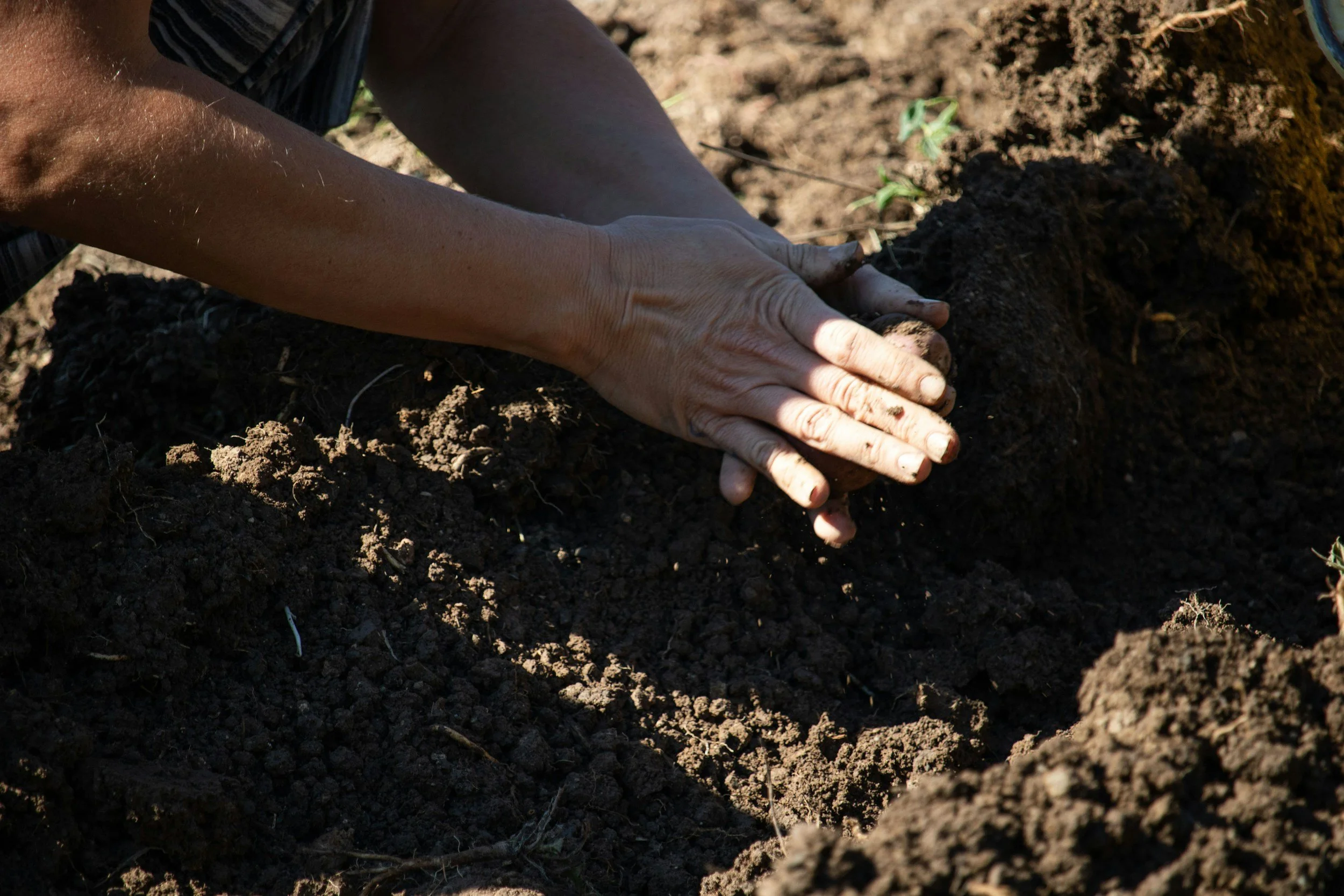
We champion practices that build and sustain healthy soil as the foundation of a thriving soil food web.
Highest & best use of organics
We support diverting organic materials from landfills and directing them toward their highest and best use through composting.
Science-based education
We provide science-based education that strengthens shared understanding about compost and soil.

Climate & community resilience
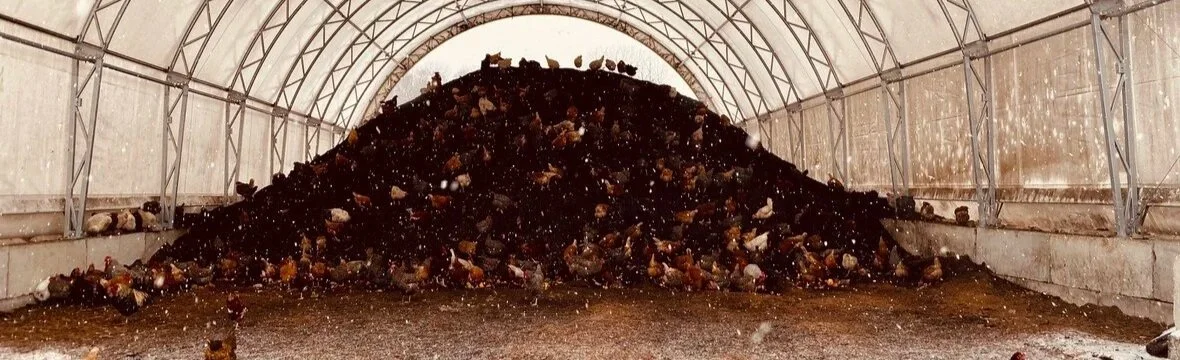
We promote composting as a tool for climate resilience and vibrant, resilient communities
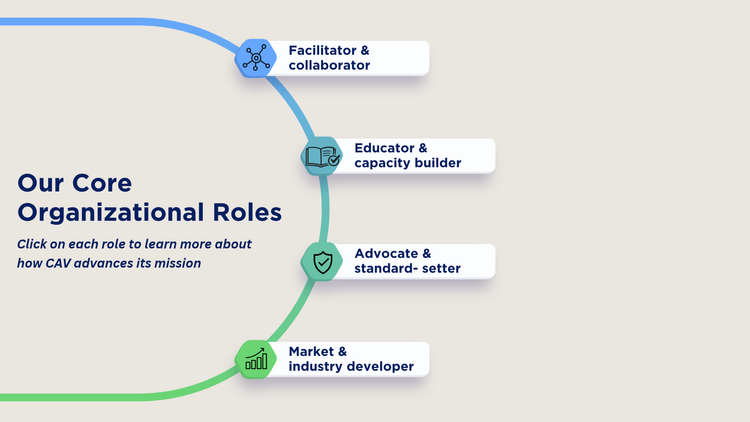
Facilitator & collaborator
- Bring people together to strengthen Vermont’s composting ecosystem.
- Foster a cooperative, solutions-oriented environment among composters, farmers, regulators, businesses, and communities.
- Facilitate cooperative purchasing, shared resources, and access to needed materials.
Educator & capacity builder
- Expand knowledge, skills, and soil literacy across Vermont.
- Provide education on effective composting practices and the benefits and applications of compost.
- Encourage sustainable soil management practices in gardening, turf, and landscaping.
- Promote composting as an essential component of sustainable agricultural systems.
Advocate & standard-setter
- Shape policy and standards that support a robust compost industry.
- Work with regulators and legislators to develop science-based standards for compost production, distribution, and use.
- Advance policies that support responsible composting, soil-safe compost, and the expansion of high-quality compost markets.
Market & industry developer
- Strengthen the economic foundation for a thriving compost industry.
- Promote market expansion and increase demand for high-quality compost products.
- Support infrastructure and system development that make composting economically viable and environmentally sound.
Our goals & priorities
Goal 1: Strengthen CAV’s Long-Term Organizational Health
Maintain strong leadership, sound governance, and sustainable funding to ensure our work remains effective and lasting.
Goal 2: Lead Vermont’s Composting Community Through Knowledge, Education & Collaboration
Be a trusted hub for sharing best practices, building professional networks, and growing community understanding of the connection among composting, healthy soil, and clean water.
Goal 3: Increase Public Awareness of CAV and the Value of Composting
More Vermonters will understand why composting matters and how CAV supports a thriving organics ecosystem.
Goal 4: Advance Policy That Supports Composting, Soil Health & Circular Systems
Help shape policies that create a strong foundation for composting in Vermont—from incentives and standards to infrastructure and market development.
Goal 5: Deepen Understanding of Compost Quality and Its Essential Role in Soil Health
Strengthen statewide awareness of why high-quality compost matters—highlighting the connection between clean feedstocks, healthy soils, and resilient ecosystems—and promote practices that protect the integrity of compost in Vermont.
-
Maintain strong board and staff leadership.
Ensure operational and financial systems that support long-term stability.
Build the resources needed to grow programs and impact.
-
Strong leadership and sound governance guide CAV with clarity, accountability, and trust.
Financial stewardship and stable operations support long-term resilience.
Resources and capacity allow CAV to grow and deliver lasting impacts.
-
Promote the links between diversion, composting, soil health, and water quality.
Expand education on backyard, community-scale, and farm-scale composting.
Engage haulers, practitioners, and educators in shared learning.
Create more opportunities for connection, training, and events.
-
CAV is recognized as Vermont’s trusted hub for composting knowledge, leadership and peer networking.
Accessible education strengthens understanding of the links between composting, healthy soils, and clean water.
Connections, trainings, and events drive collaboration and action across the composting community.
-
Grow and diversify participation in CAV programs, membership, and events.
Prioritize outreach activities that demonstrate impact and expand reach.
Broaden participation in the Vermont Organics Recycling Summit (VORS).
-
More Vermonters understand why composting matters and how CAV supports a thriving organics ecosystem.
Participation in CAV programs, membership, and events continues to grow and diversify.
Outreach and the Vermont Organics Recycling Summit expand reach, visibility, and engagement.
-
Promote legislation that incentivizes composting.
Support the development and refinement of standards and rules related to Acts 148 and 41.
Champion the expansion of composting infrastructure and markets.
Strengthen guidance, education, and enforcement to prevent contamination.
Encourage increased diversion of organics statewide.
-
Policies and incentives increasingly support high-quality composting, soil health, and circular systems.
Standards, infrastructure, and markets create a strong foundation for composting in Vermont.
Clear guidance and education reduce contamination and increase statewide diversion.
-
Expand education on source separation and standards that ensure clean, high-quality feedstocks.
Increase understanding of emerging contaminants and provide clear, timely guidance to practitioners and the public.
-
High-quality compost is widely understood as essential to healthy soils and resilient ecosystems.
Clean feedstocks and strong source separation are recognized as critical to producing soil-safe compost.
Clear, timely guidance helps practitioners and the public address emerging contaminants.