
Policy & Infrastructure
Strong composting systems depend on supportive policies, well-designed infrastructure, and the people who make them work. Vermont’s progress toward universal organics recycling is shaped by decisions at every level—from local collection programs to statewide planning and investment.
Explore the recorded webinars that touch on policy, infrastructure, and workforce development and listen to State of Organics in Vermont presentations from 2020 through 2025 to learn how the organics management systems in Vermont have changed over time.
Many webinars include downloadable resources & links to more information.
Recorded webinars related to policy and infrastructure

This policy update session provides an overview of recent and pending changes to Vermont’s solid waste and materials management framework, with particular focus on on-farm composting under Act 41 (Vermont Agency of Agriculture, Food & Markets) and updates to the Solid Waste Management Rules led by Vermont Department of Environmental Conservation, including emerging regulations for depackaging facilities.
Presenters review Vermont’s current position in the rulemaking and implementation process, summarize key provisions under consideration, and clarify anticipated timelines and areas of active discussion. The session is intended to help participants understand the practical and policy implications of these developments, including potential impacts on organics management systems, depackaging operations, compliance expectations, system capacity, and the handling of higher-risk or more complex materials—such as butcher and slaughterhouse residuals.
As a recorded session, this content reflects the regulatory landscape and discussions at the time of the event. The intent is to support shared understanding, highlight implementation considerations, and document key questions and perspectives as Vermont continues to refine and advance its solid waste management rules.
Facilitators:
Caroline Sherman-Gordon, Rural Vermont (Caroline@RuralVermont.org)
Panelists:
Steve Cash, VAAFM, Water Quality Program
Ben Gauthier, ANR/DEC Solid Waste Program
Lee King, VAAFM, Water Quality-Non-Sewage Waste Program
Stephanie Smith, VAAFM, Plant Industry Division (formerly PHARM division)

A thriving organics recycling ecosystem depends on numerous interconnected factors. In this VORS 2025 session, CTS will introduce a framework and guide participants in applying it to Vermont’s unique landscape—exploring both challenges and opportunities.
A thriving organics recycling ecosystem depends on numerous interconnected factors, including state and local support, access to land and clean feedstocks, grassroots initiatives, and demand from end users. In 2022, Compost Technical Services (CTS) conducted a comprehensive study mapping 30 key factors that influence composting success—examining them in a state that lags far behind Vermont in many aspects. This research led to the development of a practical framework for identifying strengths, addressing gaps, and fostering growth in composting systems.
In this VORS 2025 session, CTS will introduce this framework and guide participants in applying it to Vermont’s unique landscape—exploring both challenges and opportunities. The goal is to bridge what can often feel like siloed topics, celebrate the strength of Vermont's composting community, and look towards areas of future growth.
Facilitator: James McSweeney, Compost Technical Services

The need for compost-related technical service providers is growing, but there aren’t enough trained professionals to meet the demand. This VORS 2025 roundtable will focus on how to attract, train, and retain a strong workforce in this field.
The need for compost-related technical service providers is growing, but there aren’t enough trained professionals to meet the demand. Experts across Vermont and neighboring states recognize the essential role these specialists play in advancing sustainable waste management, compost best practices, and soil health.
This VORS 2025 roundtable will focus on how to attract, train, and retain a strong workforce in this field. What support do people need to enter and stay in this work? What job opportunities exist to keep skilled professionals engaged?
Join us to discuss challenges, explore opportunities, and develop strategies for building a thriving and sustainable compost technical service workforce.
Facilitator: Natasha Duarte, Composting Association of Vermont

It’s been 10 years since the onset of the Act 148 Disposal Ban and many folks are coming up with creative ways to comply! This VORS 2024 session looks at the work that solid waste management entities (SWMEs) have undertaken to support organics diversion from small businesses and includes discussion with participants about their observations, successes, and challenges.
It’s been 10 years since the onset of the Act 148 Disposal Ban and many folks are coming up with creative ways to comply! This VORS 2024 session looks at the work that solid waste management entities (SWMEs) have undertaken to support organics diversion from small businesses and includes discussion with participants about their observations, successes, and challenges.
Celebrate the steps taken by businesses and learn how propping up and promoting the good deeds being done in your community today will help others understand their options for smart diversion for the future and to realize that there are many ways to successfully divert organics for higher and better uses.
Presenter: Alex Lacy, Windham Solid Waste Management District
Video time stamps:
Resources shared:
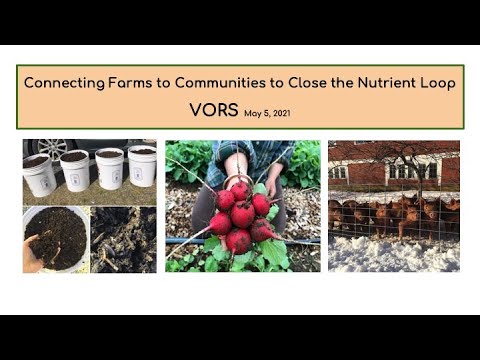
This VORS 2021 session introduces On-Farm Composting Project of the Farm to Plate Food Cycle Coalition and the resulting On-Farm Composting Booklet.
This VORS 2021 session introduces On-Farm Composting Project of the Farm to Plate Food Cycle Coalition and the resulting On-Farm Composting Booklet. The On-Farm Composting Booklet outlines regulations around composting, lays out how communities can connect to close the nutrient loop, and provides a matrix to help readers understand the regulatory thresholds aligned with compost volumes and methods of composting available. Three case studies in Vermont are highlighted to show different adaptations of closing the nutrient loop at a community scale.
Presenters and Video time stamps:
Natasha Duarte, starts at 3:33
Cat Buxton, starts at 11:05
Panel discussion with Jen Murphy and Chuck Wooster, starts at 20:52
Q&A, starts at 41:54

In this VORS 2020 webinar, our panelists share how they are helping residents capture food scraps in ways that are both helpful and convenient for the resident, while boosting economic development in their communities.
Vermont needs more local composting options! Our state is a trailblazer in keeping food out of the landfill. Even better, we are fundamentally shifting the way we collectively view food scraps. Beginning July 1, 2020, all Vermonters must keep food scraps out of their trash.
In this VORS 2020 webinar, our panelists share how they are helping residents capture food scraps in ways that are both helpful and convenient for the resident, while boosting economic development in their communities.
Presenters:
Debra Darby, Organics Recycling Consultant
Jen Murphy, Willow Tree Community Compost
Declan Stefanski, ReGreenVT
Facilitator: Emma Stuhl, VT ANR, Solid Waste Program
Video time stamps:
Introduction to session by Emma Stuhl: 1:25 (slide deck)
Deb Darby: 8:55 (slide deck)
Jen Murphy: 33:27 (slide deck)
Declan and Greg Stefanski: 51:28 (slide deck)
Q&A 1:19:21

Curious how composting can help reduce the impacts of climate change? This panelists in this VORS 2022 session talked about the relationship between greenhouse gas (GHG) emissions, carbon sequestration and compost use and helped quantify carbon sequestration and other climate-related benefits of composting.
Curious how composting can help reduce the impacts of climate change? This panelists in this VORS 2022 session talked about the relationship between greenhouse gas (GHG) emissions, carbon sequestration and compost use and helped quantify carbon sequestration and other climate-related benefits of composting.
After providing an overview of current regenerative agriculture programs, they assessed the practical application of the Climate Action Reserve’s Soil Enrichment Protocol. This protocol uses compost soil amendments for the generation and marketing of Voluntary Emissions Credits. The panelists discussed the strengths and gaps in the current protocol and looked at how future research investments could offset credits through compost amendments for soil GHG emissions capture.
Presenters and Video time stamps:
00:00 Introduction by Natasha Duarte
05:00 Sally Brown, University of Washington
25:57 Gordon Hilbun, One Earth Fund
50:20 Andrew Carpenter, Northern Tilth, LLC
Shared resources:
VORS 2021 Keynote presentation from David Montgomery

This VORS 2024 session provides an overview of EPA activities related to the sustainable management of food and recycling of organics at the national level, including EPA’s Wasted Food Scale, the National Strategy for Reducing Food Loss and Waste and Recycling Organics, and research on the environmental impacts of food waste management, the benefits of compost use, and more.
This VORS 2024 session provides an overview of EPA activities related to the sustainable management of food and recycling of organics at the national level, including EPA’s Wasted Food Scale, the National Strategy for Reducing Food Loss and Waste and Recycling Organics, and research on the environmental impacts of food waste management, the benefits of compost use, and more.
Presenters:
Julianna Beecher, EPA
Lana Coppolino Suárez, EPA
Amy Delorenzo, EPA
Video time stamps:
02:34-53:00 Presentation by Julianna Beecher, Lana Coppolino Suárez, and Amy Delorenzo, EPA
Download the slide deck (pdf)
Resources shared:
Solid Waste Infrastructure for Recycling Grant Program (EPA SWIFR)
Consumer Recycling Education and Outreach Grant Program (EPA)
EPA's Sustainable Management of Food webpage (you can sign up for the newsletter at the bottom of the page!)
Composting for Multi-Family Units shared by Illinois Food Scrap & Composting Coalition
For EPA Region 1 states, funding for work with schools (mostly through NGOs) through the Healthy Communities Grant Program for New England. Look for this opportunity to open later this summer. See some successful grantees here.
FoodKeeper App from FoodSafety.gov
Two recorded webinars on Behavior change from VORS 2022
What does it mean to pay farmers and other land stewards for ecosystem services like nutrient cycling, climate regulation, and pollination? This VORS 2022 session shared the latest activity from the Vermont's Soil Health & Payment for Ecosystem Services Working Group.
What does it mean to pay farmers and other land stewards for ecosystem services like nutrient cycling, climate regulation, and pollination? Which services do we value, whom do we pay for them, and for how long? These are some of the questions Vermont's Soil Health & Payment for Ecosystem Services Working Group has been grappling with since 2019. With recommendations due to the legislature in January 2023, the Working Group will spend the remainder of this year developing a pilot program.
This VORS 2022 session shared the latest activity from this Working Group and invited questions and suggestions to inform the outcomes!
Presenters:
00:00 VORS introduction, Natasha Duarte
05:12 Maddie Kempner, Northeast Organic Farming Association of Vermont
25:13 Discussion break
32:03 Maddie Kempner, Northeast Organic Farming Association of Vermont
51:28 Q&A and discussion
Shared resources:

This VORS 2021 webinar highlights the work of Agrilab Technologies Inc. (AGT), one of the teams funded through the VT Phosphorus Innovation Challenge. AGT is setting up a network of on-farm composting and P processing sites to stabilize and add value to P concentrates and other biomass.
This VORS 2021 webinar highlights the work of Agrilab Technologies Inc. (AGT), one of the teams funded through the VT Phosphorus Innovation Challenge. The larger effort seeks to reduce P loading to Lake Champlain and other VT waters through new practices.
AGT is setting up a network of on-farm composting and P processing sites to stabilize and add value to P concentrates and other biomass. End products are intended to be better distributed and applied within farm operations, within watersheds and for export. Use of compost aeration and heat recovery (CAHR) units aids with efficient compost operations and drying/stabilization of finished products.
Speakers and Video time stamps:
Kaitlin Hayes, starts at 4:04
Brian Jerose, starts at 11:09
Q&A, starts at 1:01:37

From grants to crowdfunding to self-financing, there are a variety of methods – and hurdles to clear – when starting and growing your compost business. This VORS 2022 session introduced USCC’s recently released study of financing methods and case studies to learn about ways you may not have considered for your business.
From grants to crowdfunding to self-financing, there are a variety of methods – and hurdles to clear – when starting and growing your compost business. This VORS 2022 session introduced USCC’s recently released study of financing methods and case studies to learn about ways you may not have considered for your business.
Presenters and Video time stamps:
00:00 VORS intro, Natasha Duarte
02:09 Linda Norris-Waldt, US Composting Council
39:55 Q&A and discussion
Shared resources

This VORS 2022 session explored different technologies used for organics management and the partnership opportunities for composters. We started by considering depackaging technology, followed by opportunities for Vermont compost companies to partner with farms to use excess solids from farm digesters.
This VORS 2022 session explored different technologies used for organics management and the partnership opportunities for composters.
We started by considering depackaging technology, the methodology used for determining contamination potential, and explored the "chain of custody" for the depackaged materials - from bin to end-use.
Following this, we heard about the opportunity for Vermont compost companies to partner with farms to use excess or used digested solids from farm digesters and the potential new revenue streams this offers both composter and farmer.
Presenters and Video time stamps:

This VORS 2021 webinar from the US Composting Council (USCC) discusses their upcoming Model Zoning Template, designed for adoption by cities, counties and towns to implement in their zoning codes.
This VORS 2021 webinar from the US Composting Council (USCC) discusses their upcoming Model Zoning Template, designed for adoption by cities, counties and towns to implement in their zoning codes.
Compost manufacturers looking to open facilities or expand are often stymied by lack of zoning and this Model Template was formed from a study of the zoning codes that are out in the policy-sphere as best zoning practices for small, large, and on-farm sites, as well as consolidation (collection) sites for community composting.
Presenters and Video time stamps:
Linda Norris-Waldt, starts at 3:09
Marcus Zbinden, starts at 20:23
Linda Norris-Waldt, starts at 43:17
Q&A, starts at 49:34
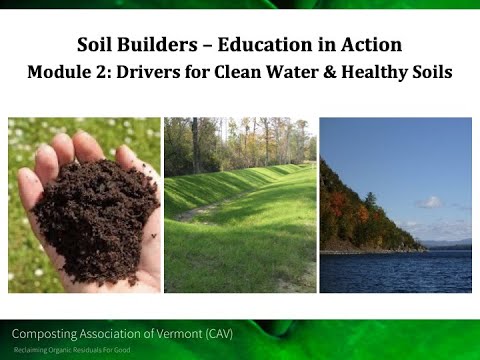
In this module of the Soil Builders program, Elly Ventura (formerly with Lamoille Regional Solid Waste Management District) and Natasha Duarte (Composting Association of Vermont) talk about the drivers for clean water & healthy soils, and how compost can support these goals.
In this module of the Soil Builders program, Elly Ventura (formerly with Lamoille Regional Solid Waste Management District) and Natasha Duarte (Composting Association of Vermont) talk about the drivers for clean water & healthy soils, and how compost can support these goals.
Video time stamps:
0:00-3:00 Introduction (Natasha Duarte)
3:00-11:10 Background (Elly Ventura)
11:10-17:15 Vermont Initiatives (Natasha Duarte)
17:15-22:35 The Compost Connection (Elly Ventura)
22:35-23:21 Conclusion (Natasha Duarte)
Resources shared:
Recycling, Waste Characterization, Food Waste:
Food Waste:
Organics Diversion/Composting:
Vermont Clean Water Initiative/Act 64
Recorded State of Organics in Vermont Reports
Video timestamps
0:00-7:05 Housekeeping, Natasha Duarte, CAV Director
7:05-10:13 Welcome from CAV, Dan Goossen, CAV Board President
10:13-31:18 ANR Welcome and State of Organics in Vermont, presented by Ben Gauthier, ANR Department of Environmental Conservation
31:18-1:17:34 Keynote address from Jayne Merner of Earth Care Farm and TheComposter podcast

2025 State of Organics in Vermont report from Alyssa Eiklor of the Vermont Department of Environmental Conservation.
2025 keynote from Michael Martinez, titled “Composting for Climate and Community Resiliency.”
Presenters and Video time stamps:
00:00-6:05 Natasha Duarte, housekeeping
6:05-10:08 Josh Kelly, ANR Welcome
10:08-12:20 Dan Goossen, CAV Welcome
12:20-33:15 Alyssa Eiklor & Josh Kelly, State of Organics in Vermont report from ANR.
33:15-1:21:42 Michael Martinez, Keynote, titled “Composting for Climate and Community Resiliency.” Michael discusses the importance of composting for soil and human health. With a focus on respecting the community’s perspective, lived experience, and leadership, there is an opportunity to create a powerful human network that mimics the beautiful living soil network below the ground.

In the plenary of the 2020 Vermont Organics Recycling Summit (VORS), we heard opening Remarks,Peter Walke, Commissioner, VT Department of Environmental Conservation; the State of Organics in Vermont report from Josh Kelly, ANR, Solid Waste Program; and a keynote from Dr. Meredith Niles, UVM.
In the plenary of the 2020 Vermont Organics Recycling Summit (VORS), we heard:
Opening Remarks from Peter Walke, Commissioner, VT Department of Environmental Conservation
State of Organics in Vermont report from Josh Kelly, Materials Management Section Chief, ANR, Solid Waste Program
The keynote, titled Who me? Waste Food? Vermont household food waste perceptions and behaviors, from Dr. Meredith Niles, Department of Nutrition and Food Sciences, UVM.
Video time stamps and Shared resources:
Opening remarks by Commissioner Peter Walke starts at 2:12
State of the State by Josh Kelly starts at 6:40 (slide deck)
Keynote by Dr, Meredith Niles starts at 29:17 (slide deck)
Q&A starts at 1:10:22

This is a recording of the VORS 2021 opening remarks and State of Organics in Vermont report.
This is a recording of the VORS 2021 opening remarks and State of Organics in Vermont report.
Speakers and Video time stamps:
Opening remarks by Commissioner Peter Walke starts at 2:30
State of the State by Josh Kelly starts at 6:43 (slide deck)

Josh Kelly, Solid Waste Program Manager at the Vermont Department of Environmental Conservation, presented the VORS 2022 State of Organics in Vermont report.
Josh Kelly, Solid Waste Program Manager at the Vermont Department of Environmental Conservation, presented the VORS 2022 State of Organics in Vermont report.
Download a pdf of the State of the State presentation.
Resources shared:
From EPA - Emerging issues in food waste persistent chemicals and plastic contamination
From UVM’s Dr. Eric Roy - Testimony provided to VT House Natural Resources Committee
EPA literature review of PFAS and plastic levels detected in food waste and compost

This webinar was part of the 2023 Vermont Organics Recycling Summit (VORS), held as a kickoff event one week before International Compost Awareness Week.
This webinar was part of the 2023 Vermont Organics Recycling Summit (VORS), held as a kickoff event one week before International Compost Awareness Week.
Presenters and Video time stamps:
00:00 Welcome to VORS 2023 from Natasha Duarte
01:38 Opening remarks from Deputy Commissioner, John Schmeltzer
09:28 State of the State of Organics in Vermontfrom Alyssa Eiklor
Download the 2023 State of the State of Organics slide deck (pdf)

VORS 2024 welcomes from CAV and the Director of the VT ANR Climate Action Office, and the State of the State of Organics in Vermont report.
VORS 2024 welcomes from CAV and the Director of the VT ANR Climate Action Office, and the State of the State of Organics in Vermont report.
Video time stamps:
0:00-1:49 Introduction to VORS 2024 (Natasha Duarte, CAV Director)
1:49-6:35 Welcome from CAV (Dan Goossen, CAV President)
6:35-30:35 Welcome from ANR Climate Action Office (Jane Lazorchak, Director)
Download the slide deck (pdf)
Link shared: ClimateChange.vermont.gov/calendar
30:35-1:06:58 State of the State of Organics in Vermont (Emma Stuhl, VT ANR DEC)
Download the slide deck (pdf)
What changes are being proposed to Vermont's Solid Waste Rules, and what could they mean for composters, digesters, haulers, generators, and the broader organics community?
In this June 2026 Compost Conversation webinar, Ben Gauthier of the Vermont Department of Environmental Conservation (DEC) provides an overview of proposed revisions affecting organics management, including new provisions related to depackaging, contamination prevention, load inspection programs, and source-separated food scraps.
Topics discussed include:
Why the rules are being updated and the connection to Act 170
Proposed prohibitions on commingling source-separated organics with packaged food
Mechanical depackaging requirements and operational expectations
Contamination prevention and emerging concerns such as microplastics and PFAS
Load inspection programs and state support for education and enforcement • Questions around biosolids, digestate, and imported depackaged materials
On-farm composting exemptions and alignment with Act 41
Outreach and guidance needs for generators, haulers, and facilities