
Soil Builders - Education for Action
Resilient Basin. Resilient Lake.
Resilience starts upstream
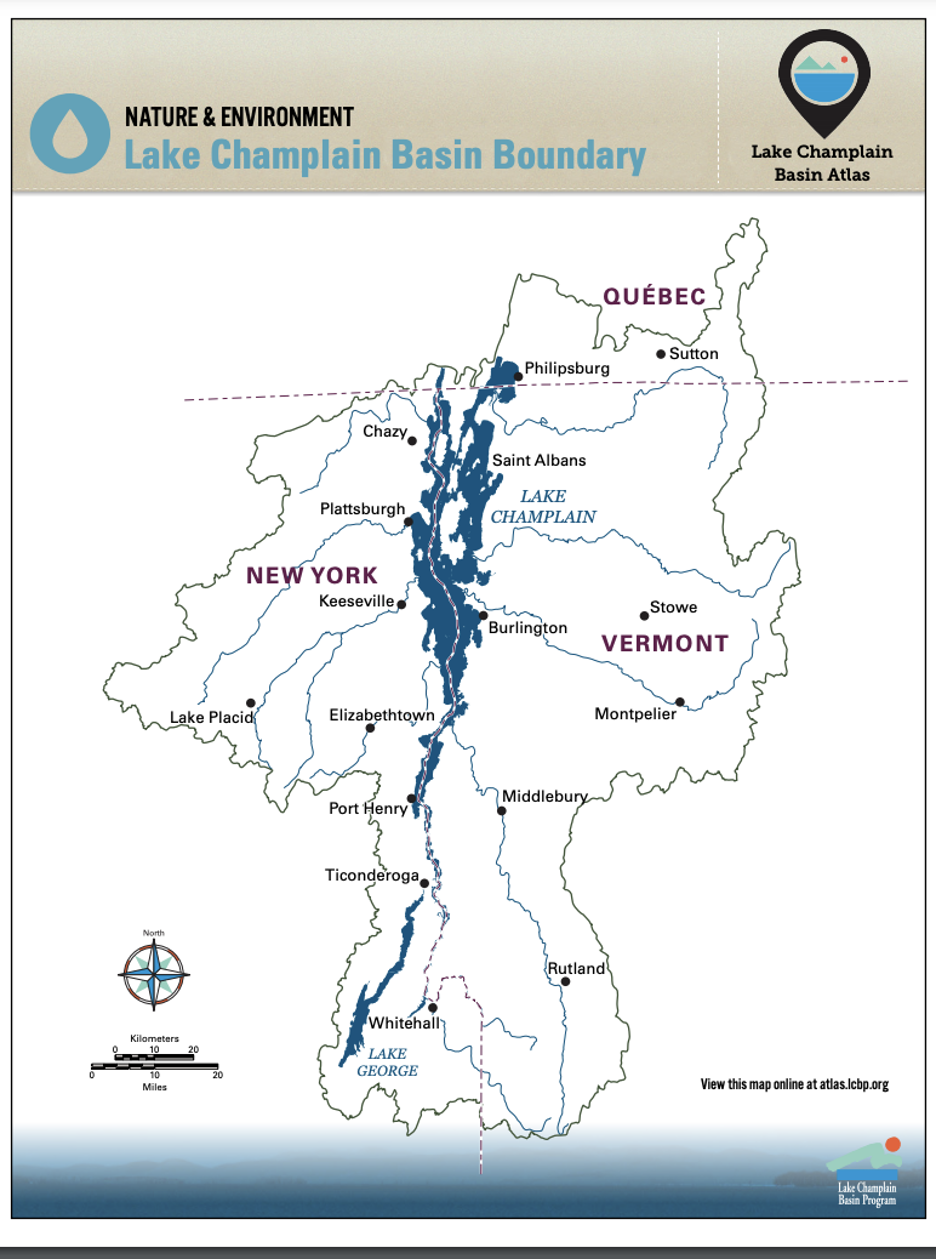
Lake Champlain’s health is shaped by the land that surrounds it.
Water moving across farms, lawns, roads, and communities carries sediment, nutrients, and pollutants into the lake.
Changing those outcomes starts with soil.
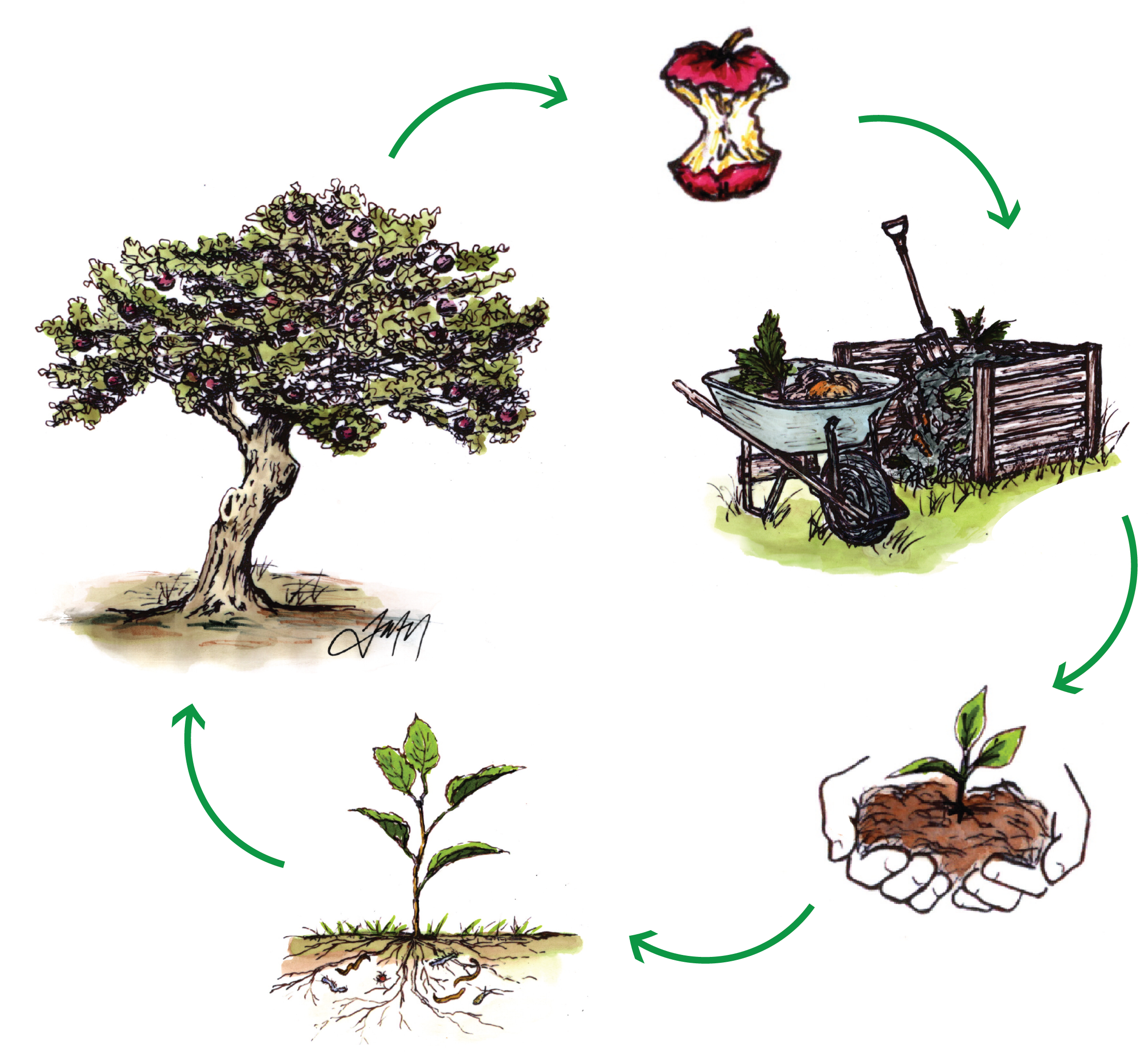
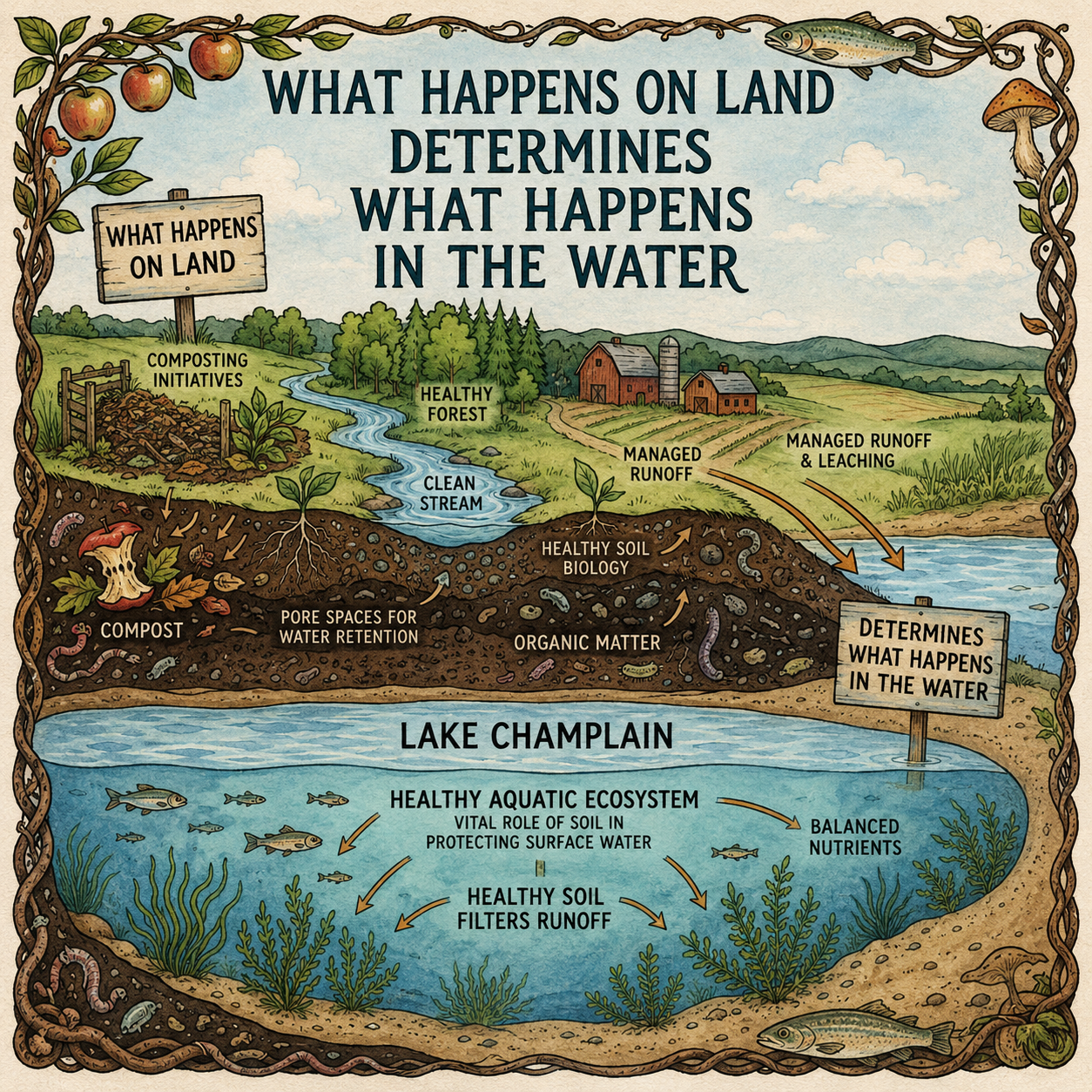
Artwork by Artwork by Jeannie Marie Nicklas www.jeanniemarienicklas.com
Building resilience across the Basin
Healthy soils—rich in organic matter and biological life—can:
Absorb and store water
Reduce runoff and erosion
Filter pollutants
Support recovery after disturbance
As more land adopts soil-building practices, the entire system becomes more stable.
The work is already happening
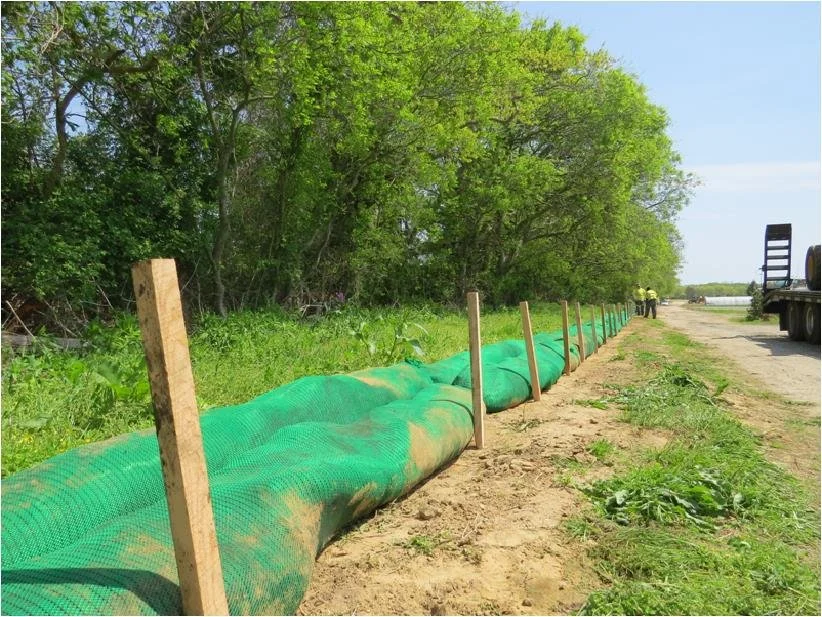
Across the Basin, compost and soil-based practices are being used to:
Restore floodplains
Stabilize streambanks
Improve agricultural soils
Strengthen public landscapes
These efforts demonstrate that soil health is a practical, scalable solution.
Measuring progress
Long-term monitoring tracks changes in:
Phosphorus levels
Chlorophyll concentrations (a measure of algae growth)
Dissolved oxygen and temperature
These indicators help determine whether land-based actions are improving water quality.
A shared effort: resilience is built through coordinated action across:
individuals
farms
municipalities
agencies
organizations
No single action is enough—but together, they add up.
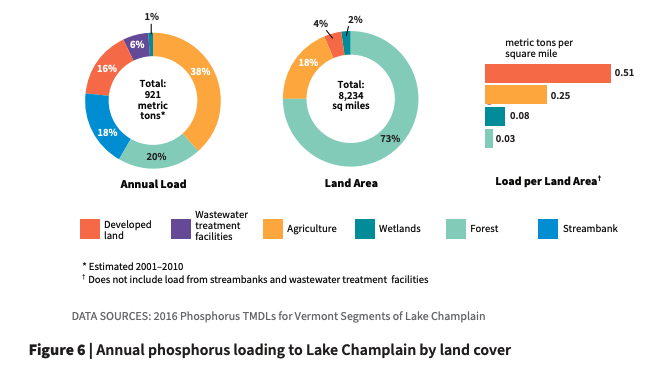
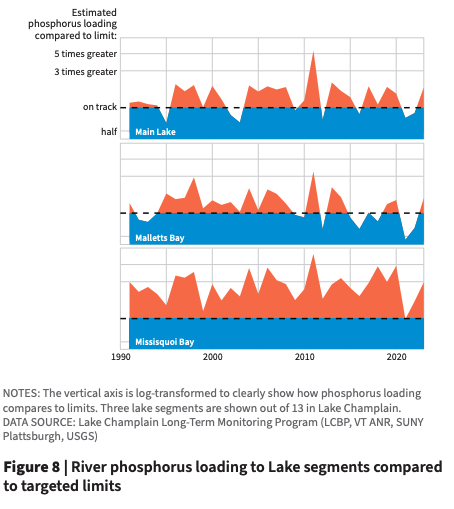
Figures from the 2024 State of the Lake Report
What you can do
Support soil health practices in your community
Participate in local projects
Share ideas for where compost and soil solutions can be applied
Partner with organizations working on these issues

Key takeaway
What happens on land determines what happens in the water.
A resilient basin leads to a resilient lake.

This project has been funded wholly by the United States Environmental Protection Agency under assistance agreement (LC00A00605) to New England Interstate Water Pollution Control Commission in partnership with the Lake Champlain Basin Program.