
Soil Builders - Education for Action
Healthy Soil. Cleaner Water.
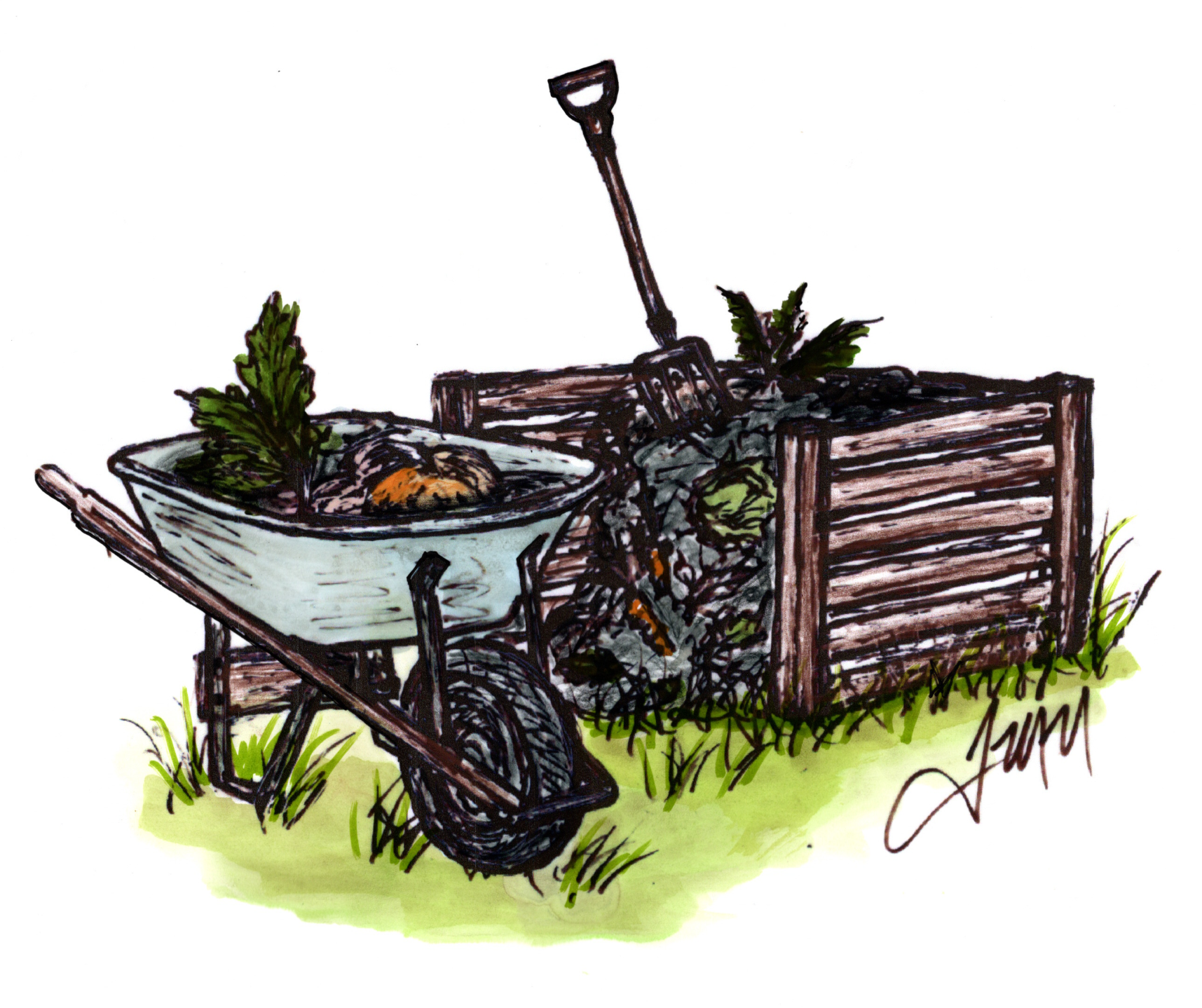
What does an apple core have to do with Lake Champlain?
More than it might seem.
Across the Lake Champlain Basin, what happens to everyday materials—like food scraps, leaves, and yard debris—has direct consequences for soil health and water quality. An apple core can either become waste in a landfill or a resource that helps protect rivers, streams, and ultimately the lake.
That choice—waste or resource—is where the story begins.
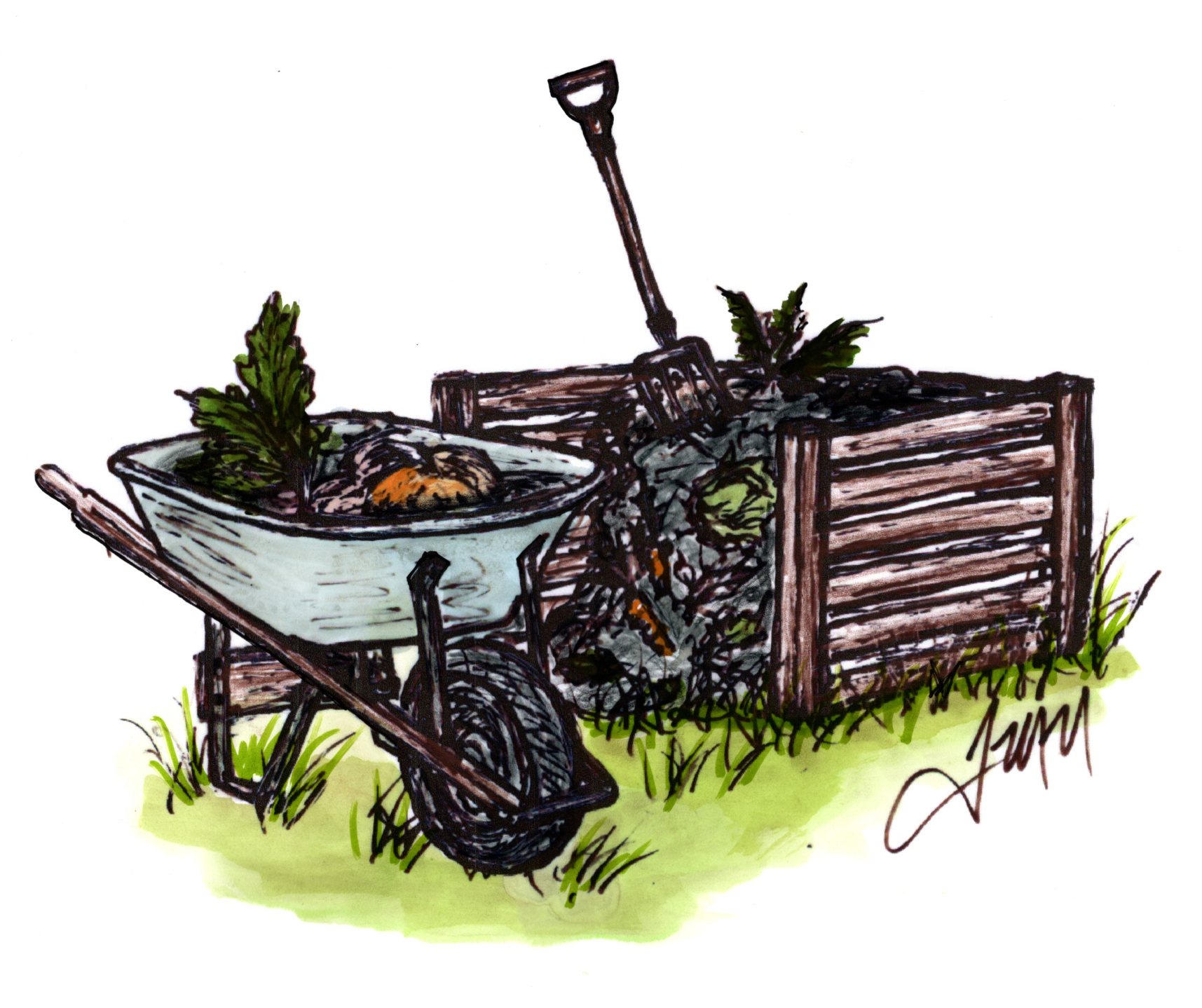
Artwork by Artwork by Jeannie Marie Nicklas www.jeanniemarienicklas.com
From waste to resource

When food scraps are thrown away, they are typically buried in a landfill, where they break down without oxygen and produce methane, a potent greenhouse gas.
When those same materials are composted, they are transformed into a stable, nutrient-rich product that can be returned to the land.
Compost is created by managing the decomposition of organic materials such as:
Food scraps
Leaves and yard debris
Animal manure and bedding
Wood chips and other carbon-rich materials
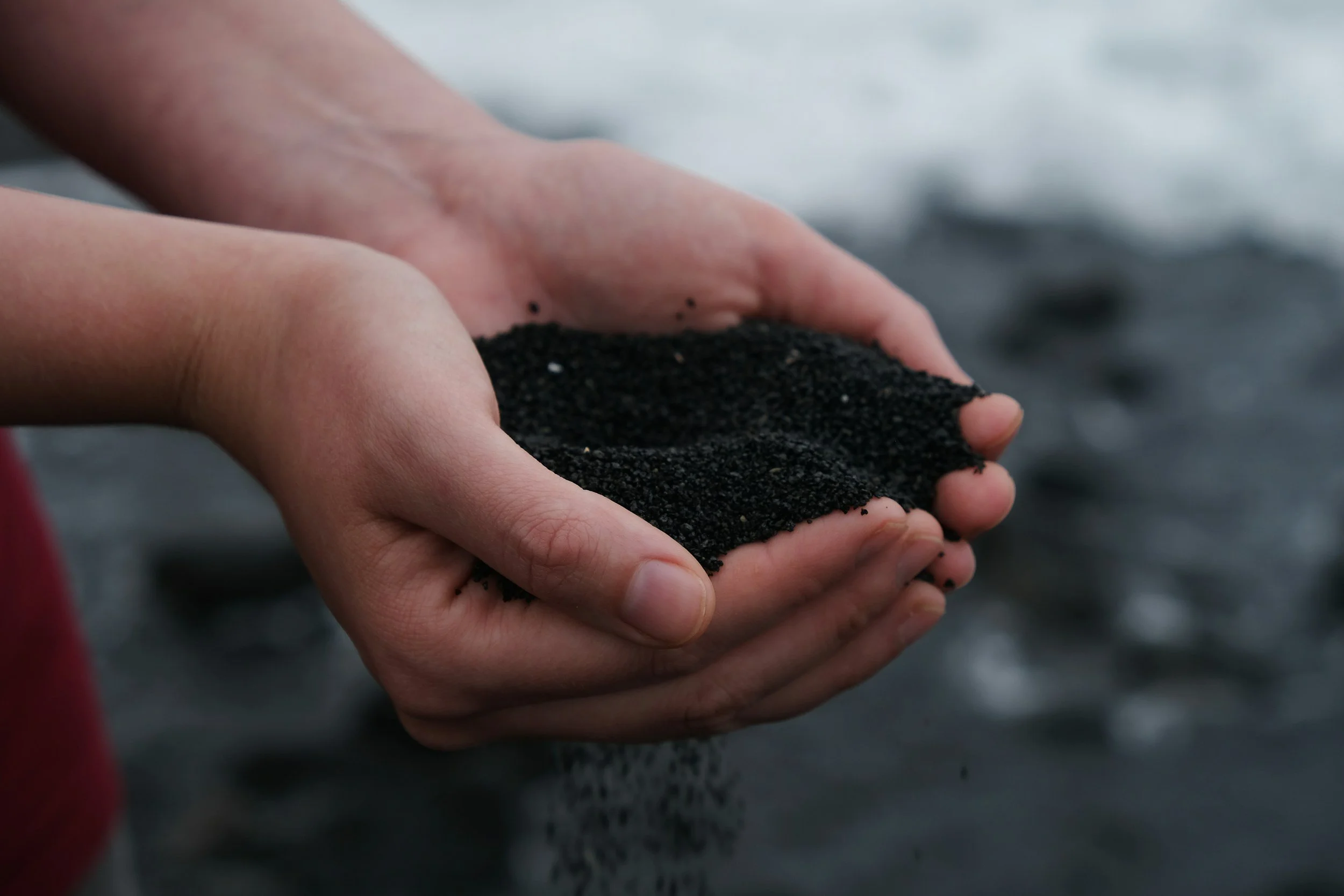
The result is a dark, crumbly material that supports soil function in ways that go far beyond fertilization.
What compost does in soil
Compost improves how soil works. It:
Builds soil structure, creating stable aggregates that allow air and water to move through the soil
Increases water infiltration, helping rain soak in rather than run off
Improves water retention, allowing soil to store moisture for later use
Supports biological activity, providing habitat and food for microorganisms
Keeps nutrients in place, reducing the loss of phosphorus and other elements to nearby waterways
Rather than acting as a quick-release input, compost helps restore the physical, chemical, and biological systems that make soil function.
Soil: the “other aquatic ecosystem”
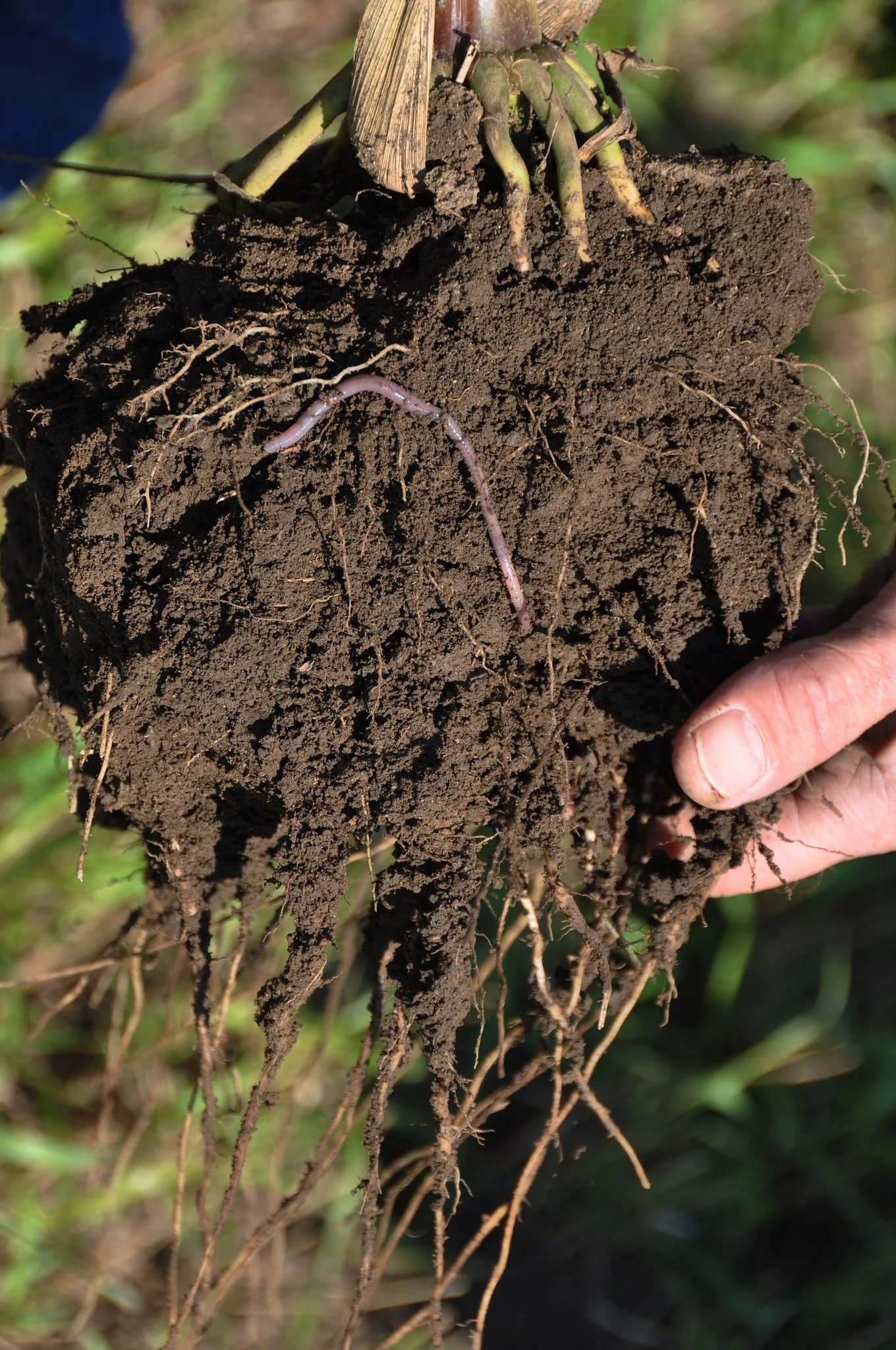
Soil is often thought of as dry and inert. In reality, it functions as a dynamic, water-based system. Within soil:
Water fills pore spaces between particles
Nutrients dissolve and move in solution
Microorganisms depend on moisture to survive and function
Chemical and biological processes occur continuously
In this way, soil operates similarly to wetlands and other aquatic environments—storing, filtering, and transforming what moves through it. This is why soil is sometimes described as “the other aquatic ecosystem.”
How soil protects water
The connection between soil and water quality is direct.
When soil is healthy:
Rainwater is absorbed where it falls
Water moves slowly through the soil profile
Sediment is held in place
Nutrients are retained or transformed
Pollutants are filtered before reaching groundwater or surface water
When soil is degraded—compacted, bare, or low in organic matter—the opposite occurs:
Water runs off quickly
Soil erodes
Nutrients and pollutants are carried into streams and lakes
Across the Lake Champlain Basin, this runoff is a leading source of water pollution.
Healthy soil changes that outcome.
Why this matters in the Lake Champlain Basin
The Lake Champlain Basin spans more than 8,000 square miles across Vermont, New York, and Quebec. Water connects this entire landscape.
Rain falling on:
farms
lawns
roads
forests
eventually flows into tributaries and then into Lake Champlain.

Along the way, it can carry:
phosphorus (a key driver of algae blooms)
sediment
road salt
other contaminants
diverting organic materials from landfills
expanding composting systems
improving soil health on working lands and developed areas
These strategies recognize that protecting water begins with managing land—and soil—more effectively.
Efforts across the Basin are working to reduce these impacts by:
The role of compost in regional solutions
Policies and programs across the region increasingly support composting and soil health as part of water quality protection.
For example:
Vermont’s Universal Recycling Law (Act 148) requires diversion of food scraps and other organic materials from landfills
New York and Quebec have implemented similar organics diversion and composting initiatives
These efforts:
reduce greenhouse gas emissions
create valuable soil amendments
support local infrastructure and economies
contribute to improved water quality outcomes
Compost is not just a waste solution—it is a land and water management tool.
What you can do
You don’t need to manage a farm or a large project to make a difference. Start with one step:
In your community
Support local composting programs
Advocate for soil-based solutions in public projects
Encourage practices that reduce runoff and erosion
At home
Compost your food scraps
Use compost in gardens and landscapes
Reduce bare soil by mulching or planting
As a consumer
Support farms and businesses that build soil health
Choose products and services that reduce waste
Small actions, taken across the Basin, contribute to measurable change.
Key takeaway
An apple core is not just waste. Handled differently, it becomes part of a system that builds soil, manages water, and helps protect one of the region’s most important natural resources. Healthy soil leads to cleaner water.

This project has been funded wholly by the United States Environmental Protection Agency under assistance agreement (LC00A00605) to New England Interstate Water Pollution Control Commission in partnership with the Lake Champlain Basin Program.